 TAL Project
TAL Project
TAL Project
This project launched in March 2020 and has served 2 business lines and 1,090,000 + students in China.
Due to NDA, sensitive data has been modified and design details have been omitted.
TAL Education Group is a leading education technology enterprise serving over 30 million users across 42 cities in China. Our team, the Silicon Valley R&D Center, is TAL's first overseas R&D center dedicating to leveraging cognitive science, data science, and human-computer interaction to empower TAL's core business lines.
As the sole UX Designer in this project, I led the end-to-end design process from early research through final execution.
Traditionally, online assessments follow a simple formula: answer questions, and receive a score. But with the rapid evolution of Computerized Adaptive Testing and Personalized Assessment Services, our stakeholders raised the bar on what a modern assessment should deliver:
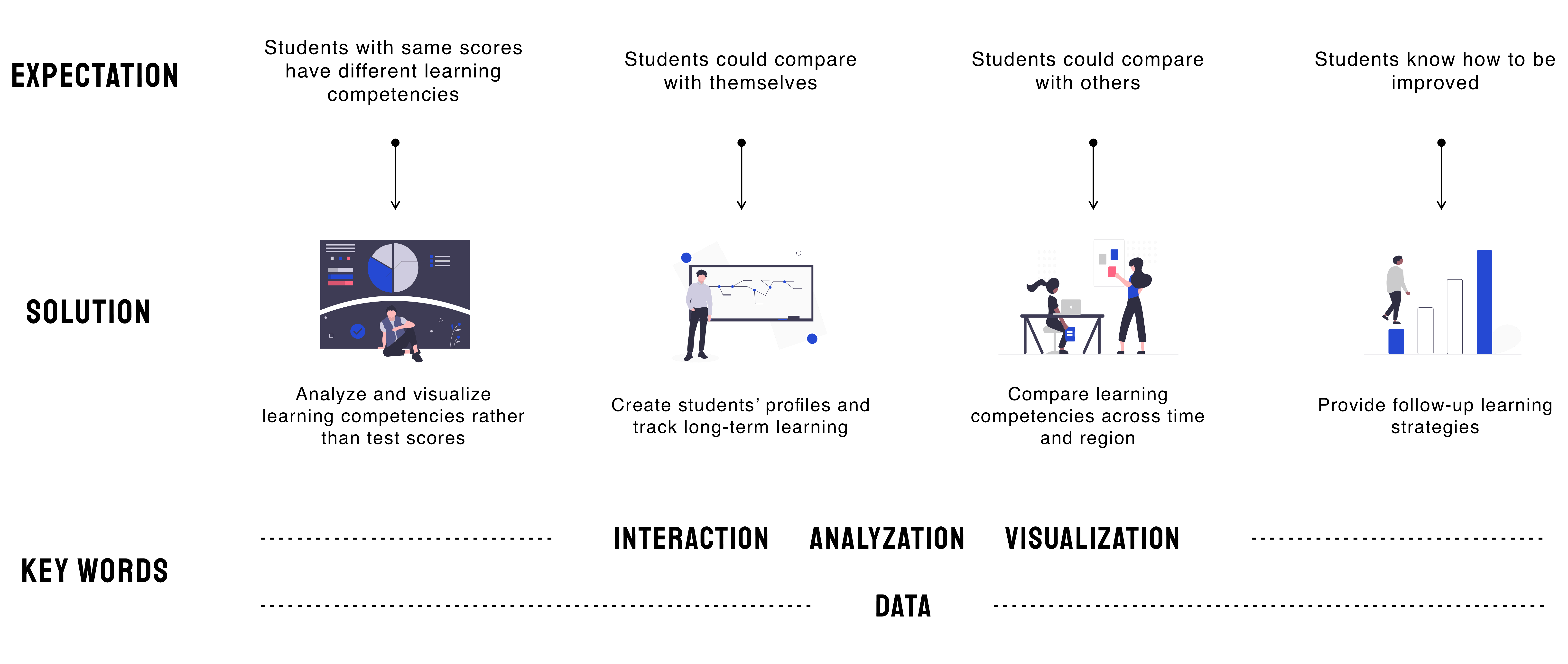
1) Analyze and visualize students' learning competencies instead of their test scores, considering students with identical scores may have vastly different competencies.
2) Create and track long-term student profiles, enabling self-comparison over time.
3) Compare learning competencies across time and region, enabling peer comparison.
4) Provide actionable, follow-up learning strategies so students know exactly how to improve.
These new requirements placed heavy demands on data infrastructure — surfacing two critical challenges.
1) Data Consistency: The data flow before, during, and after an assessment must remain consistent to preserve analytical integrity. This meant our product needed to fully cover the entire assessment journey, end to end.
2) System Compatibility: As the central R&D Center, we support multiple business units across TAL. Any solution built for Xueersi and Izhikang needed to be modular enough for seamless integration into other business lines.

Starting with Izhikang and Xueersi as our first collaboration, our broader ambition was to lay a foundation robust enough to support diverse business lines and user bases. Rather than build a single assessment app or analytics tool, we set out to create a complete ecosystem that could cover the entire assessment lifecycle with a full suite of integrated tools.

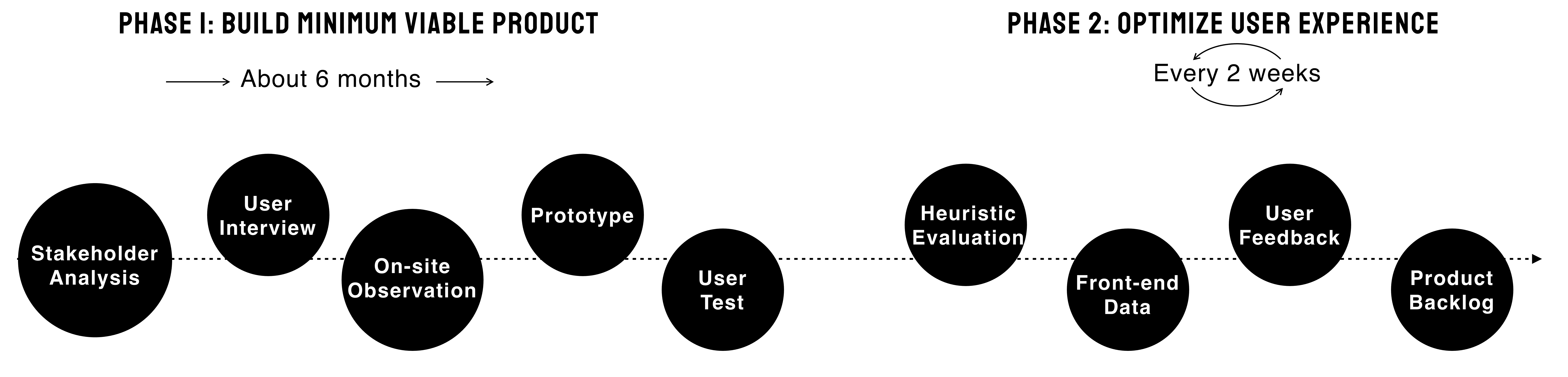
Time for UX research and design was limited, yet both remained essential to sound product decisions. To balance depth with speed, we split our roadmap into two distinct phases:
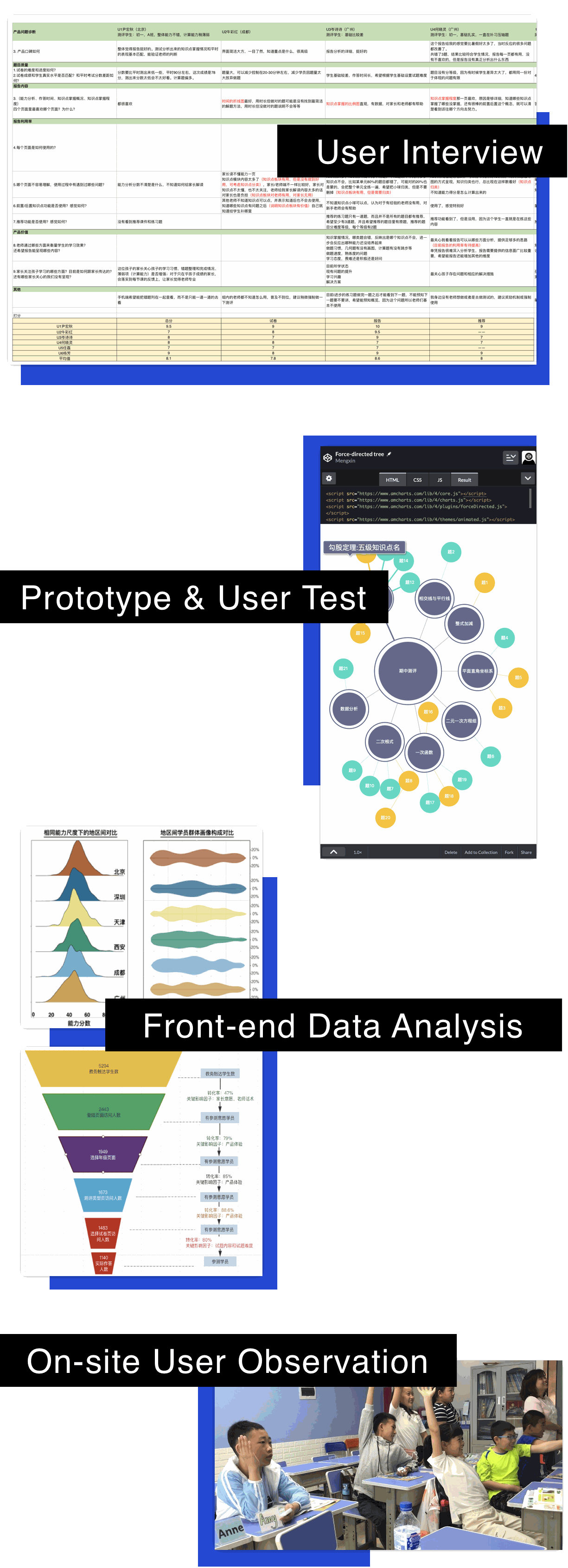
1) Building the MVP: We invested 6 months in large-scale user research, visiting schools across 7 cities in China and engaging multiple stakeholder groups including instructors, students, parents, and school directors.
2) Agile Iterations: Within each 2-week sprint, we leverage live user data and feedback from released products to drive continuous, evidence-based design improvements.
Extensive early-stage research revealed a simple truth: while assessment scenarios vary widely — some online, others administered in the classroom — the underlying process remains remarkably consistent. To ensure our ecosystem could scale seamlessly across TAL's diverse business lines, we distilled the essential user actions from 10+ assessment scenarios and organized them into three phases, each with its own design goal:
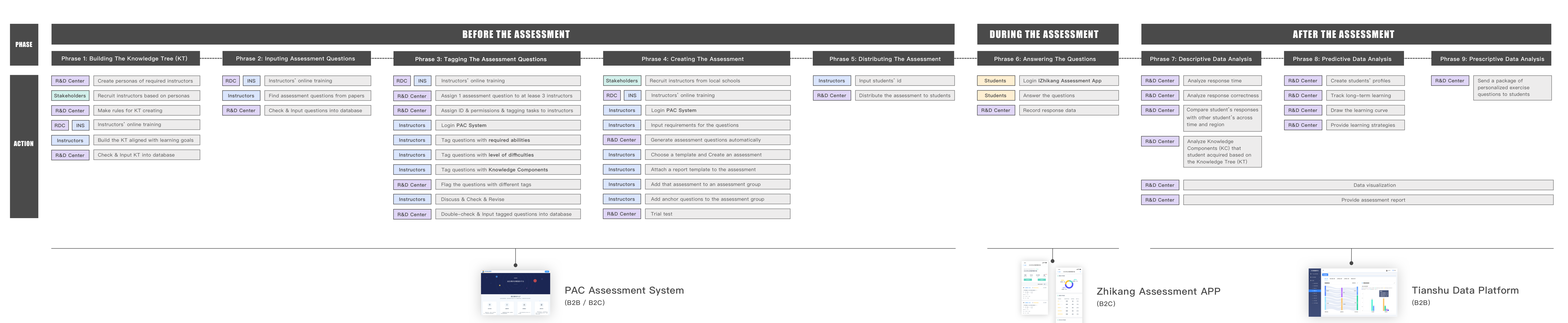
Great assessments begin with great questions — and preparing them has long been a heavy lift for instructors. PAC System was designed to change that: a comprehensive suite of tools that empowers instructors to craft high-quality questions with speed, ease, and confidence.
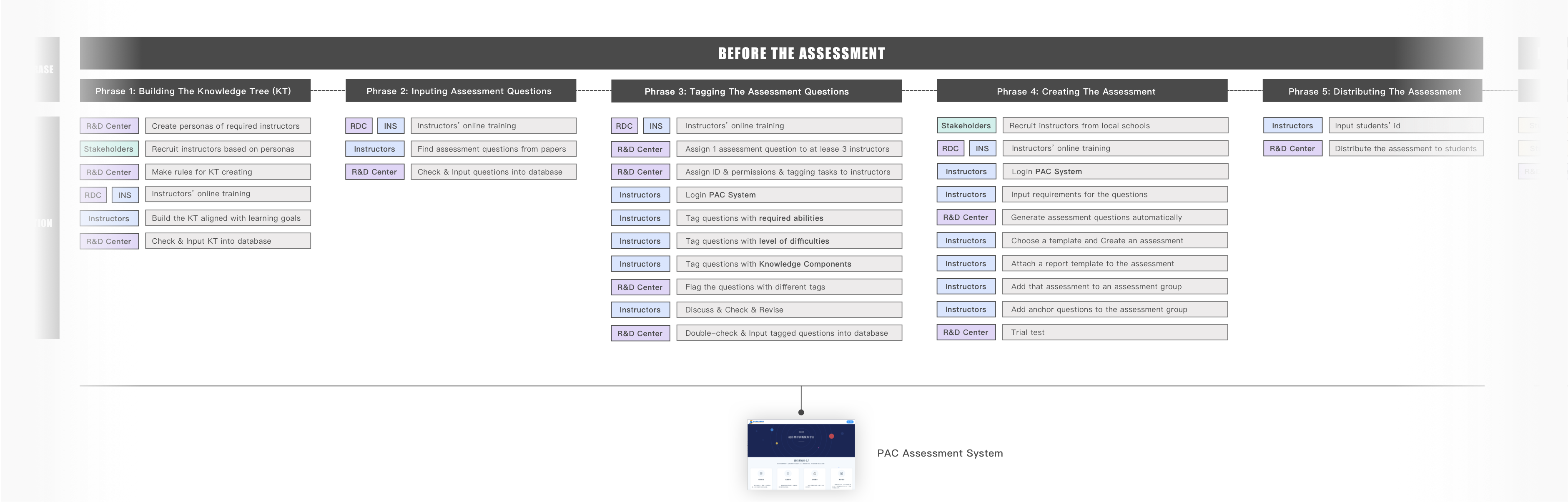
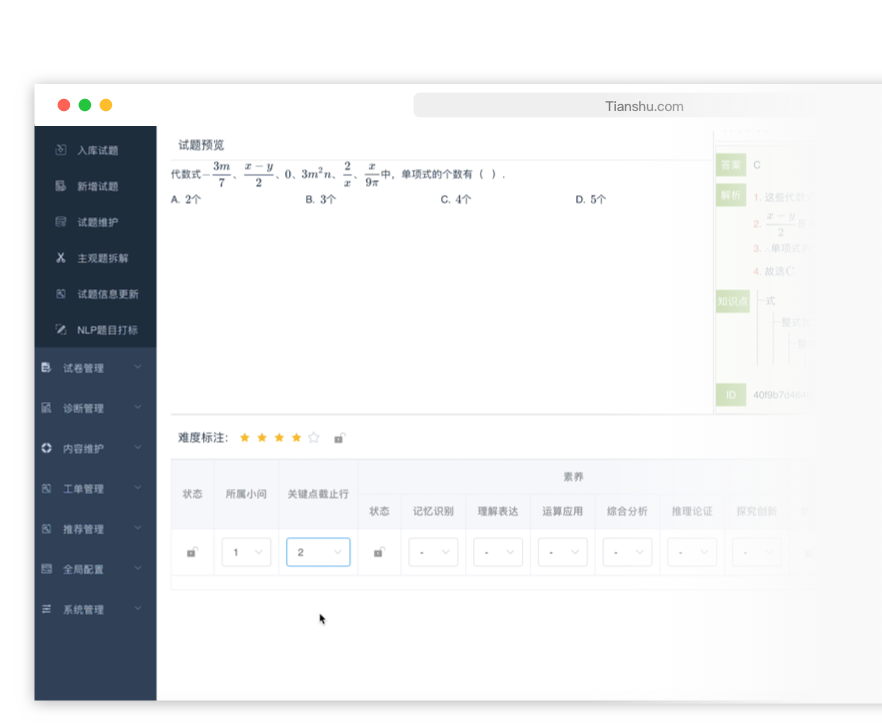
Accurate tagging is the backbone of question quality. For immediate use, PAC System offers a curated database of 50,000+ pre-tagged questions. And for instructors introducing new, untagged questions, PAC System makes tagging effortless through intuitive interfaces and streamlined workflows.
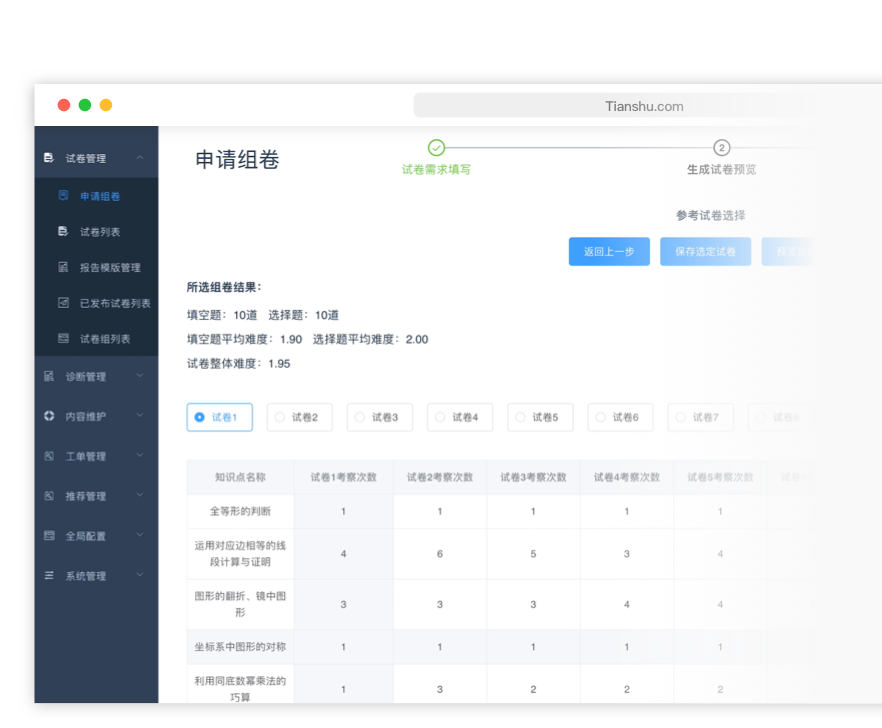
Different goals call for different assessments, and knowing where to start can be daunting. A placement test? An in-class quiz? Something calibrated for average difficulty, or laser-focused on a single knowledge point? PAC System lets instructors select templates, knowledge components, difficulty levels, and question types — then generates the assessment automatically to match.
For instructors seeking a personal touch, PAC System offers rich customization from interface styling to bespoke feedback messaging. With an extensive library of templates and toolkits, every assessment can be shaped to reflect its creator's exact intent.
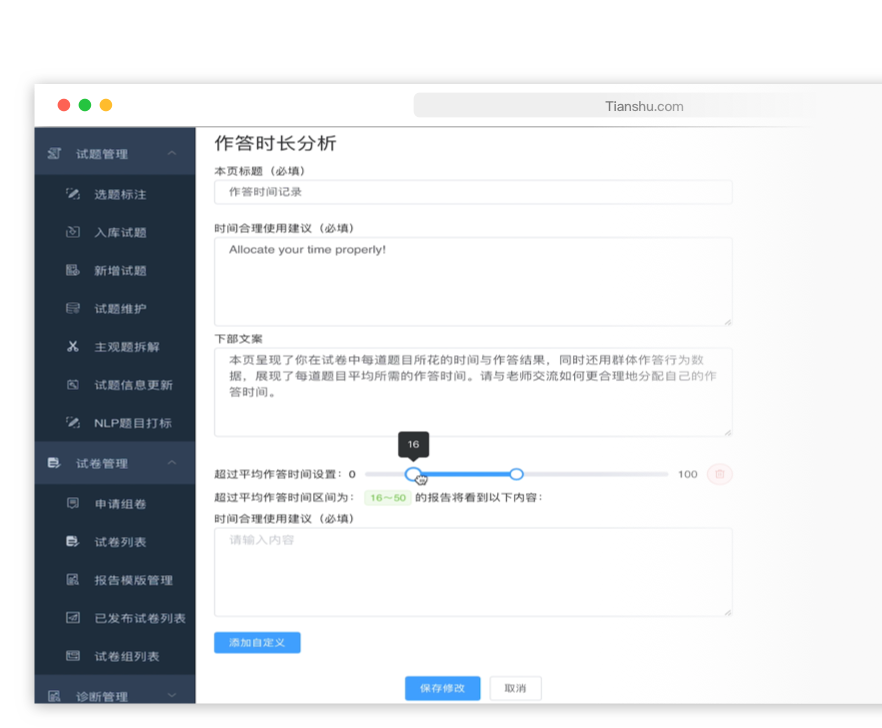
Every two weeks, we conduct heuristic evaluations grounded in Jesse James Garrett's Five Elements of UX and make continuous refinement.

Traditional assessments follow a one-way exchange: students receive a paper, answer the questions, and receive a score — with little room for interaction, dialogue, or learning in between.
Zhikang Assessment App reimagines this experience as something interactive and alive. Through adaptive testing, immediate feedback, in-test data capture, and interactive score reports, students remain genuinely engaged from the first question to the last.
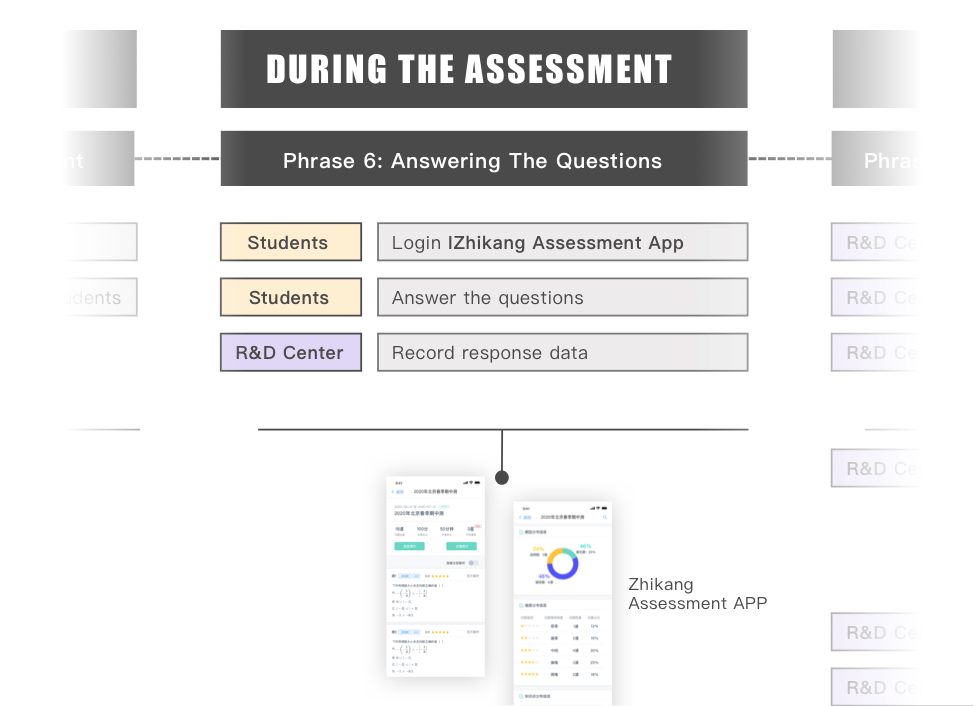
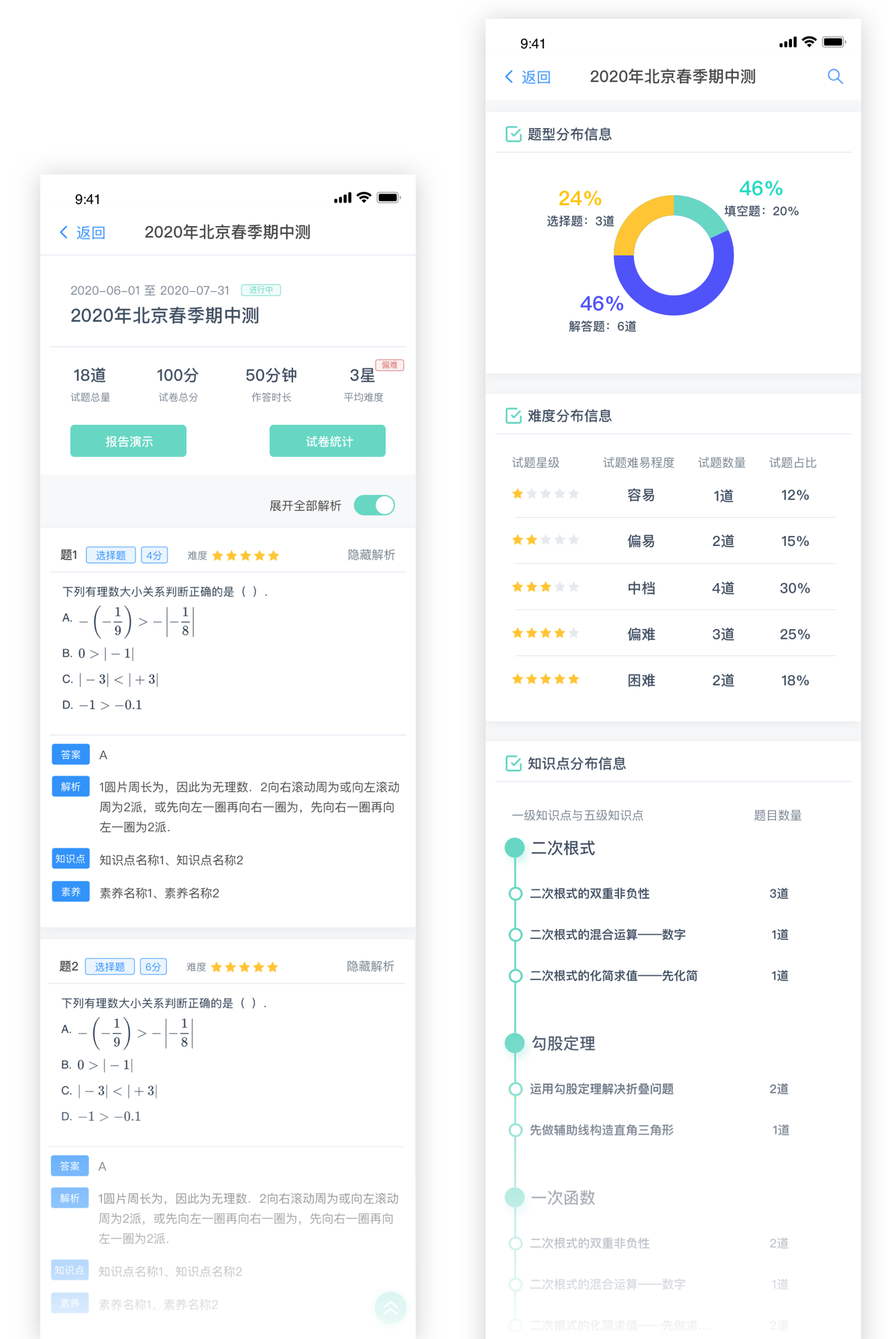
A test rarely serves its purpose when students see only the question, with no insight into its intent. Mid-assessment, students often wonder: What knowledge component does this question test? Is it hard, or easy? Why am I stuck — is it this question specifically, is the difficulty simply too high, or do I need more practice with this type of problem?
Zhikang Assessment answers these questions through a thoughtfully designed in-test preview and paper analysis, giving students the full picture before they begin:
1) Question type.
2) Tested knowledge components (KC).
3) Difficulty distribution and analysis.
4) Average response time.
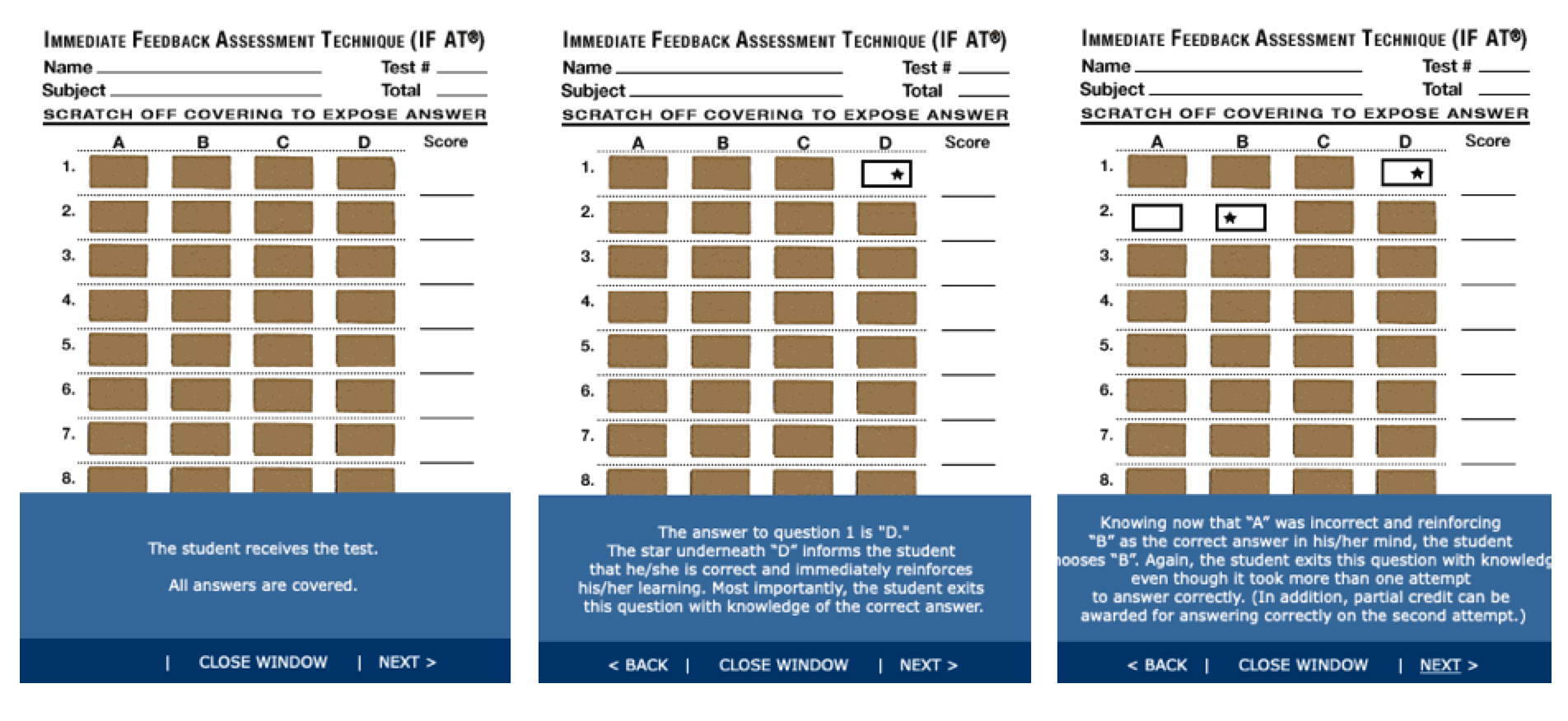
1) Deliver immediate in-test feedback: shifting from mere "assessment of learning" toward true "assessment for learning."
2) Capture students' in-test journaling: recording not just their answers, but how they arrived there, attempts and all.
3) Motivate through gamification and genuinely engaging assessment mechanics.
Evidence of learning rarely lives in the final score — it's found in the attempts, the choices, the moments of struggle along the way. Learning is a process, yet most students are only ever shown the outcome.
Zhikang Assessment captures that process by inviting students into in-test journaling, then brings their learning to life through an interactive test report. By engaging with the report — clicking through charts, comparing response times, dragging knowledge component nodes into place — students are drawn naturally into analyzing their own performance, building a deeper sense of ownership over their learning.
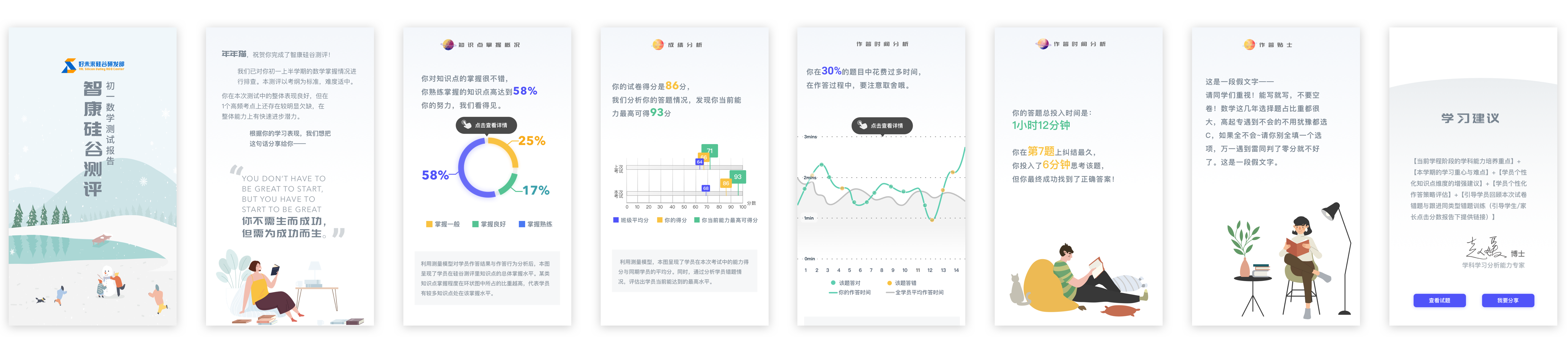
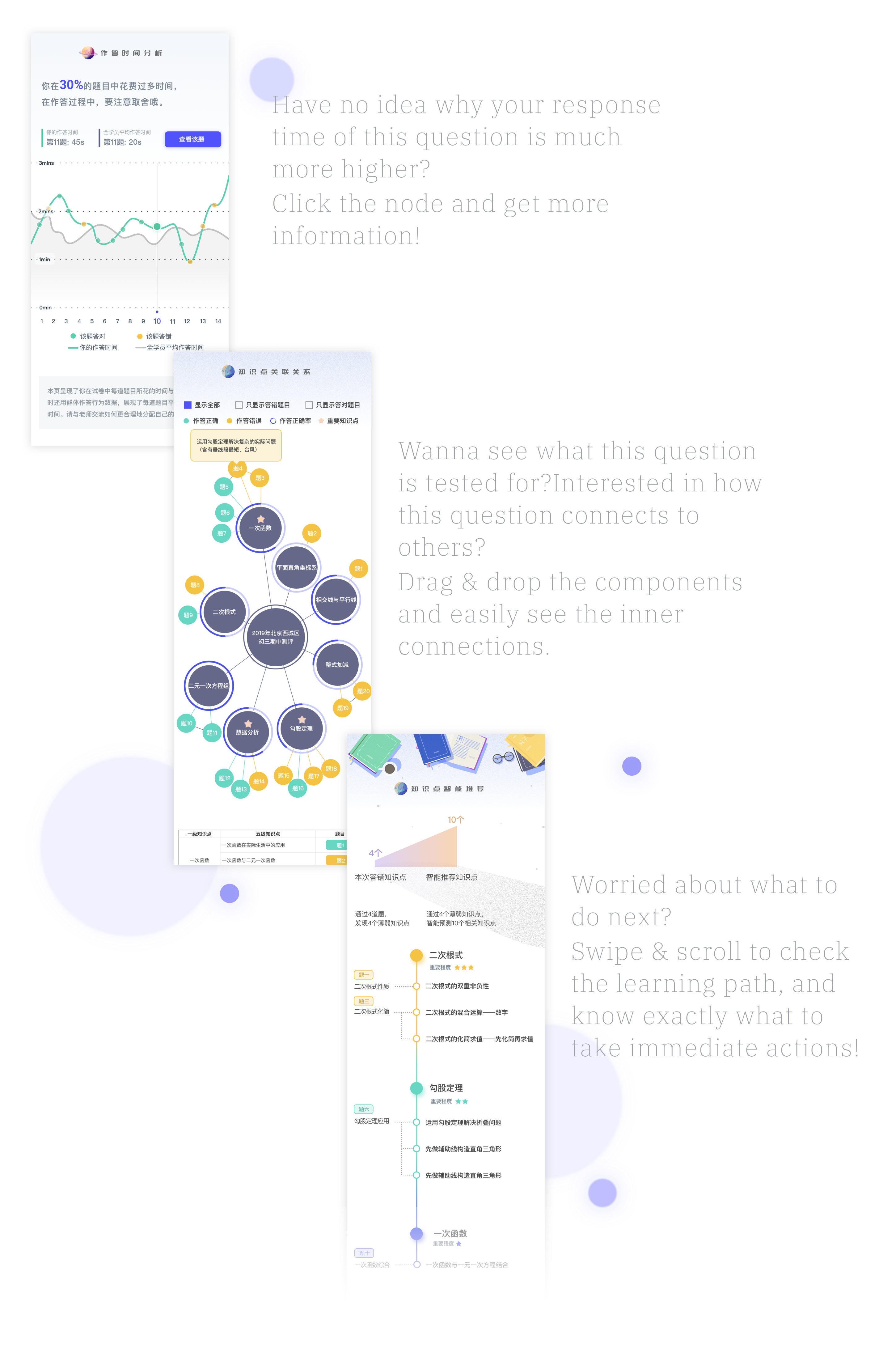
I'll use the design process of our interactive test report as an example to demonstrate how we got there step by step.
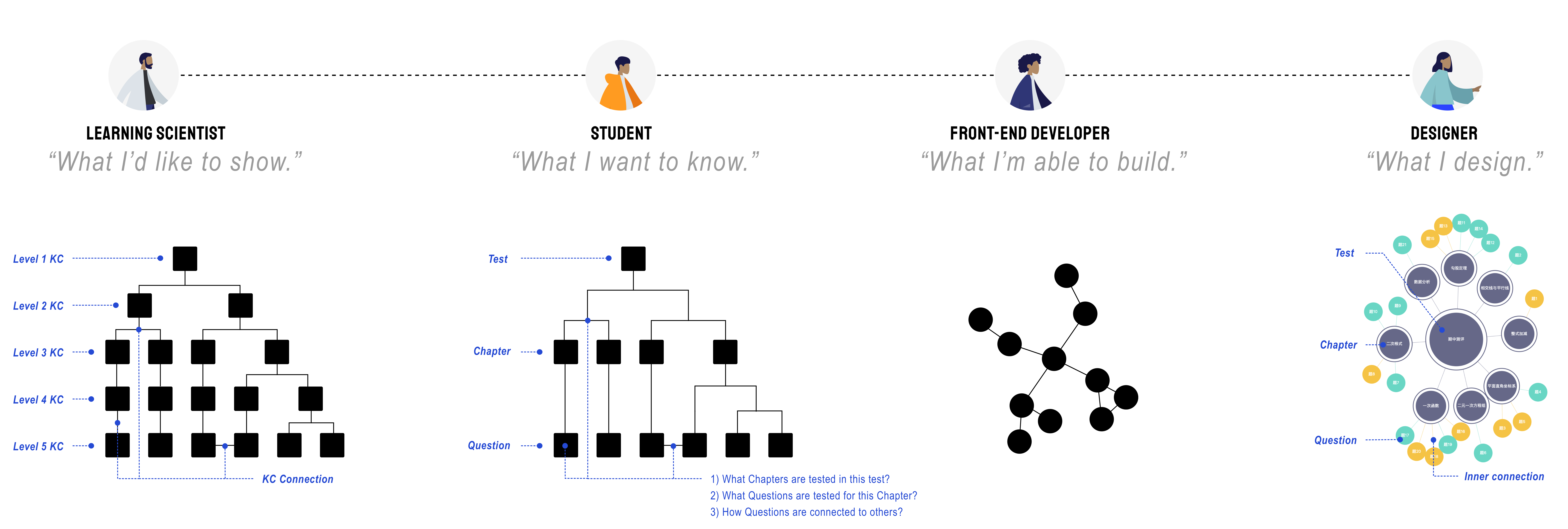
1) Learning scientists defined the foundational data requirements for the report. Our first priority was understanding these requirements deeply, and aligning on a shared vision from the outset.
2) Students don't know — or care about — academic terminology. So to make the visualization truly student-friendly, we spoke their language instead. For example, we translated the learning scientists' academic term "Level Three Knowledge Components" into something students already recognize: the chapter.
3) Developers ultimately determine what's feasible to build. Early concepts were shared with the engineering team from day one, striking a healthy balance between design ambition and technical reality.
4) Weighing what learning scientists needed to convey, what students hoped to understand, and what developers could realistically build, we arrived at a foundational visualization structure.
After we decided on what and how to show, we explored the full solution space, built mockups for each, and identified the strongest candidate through user testing.
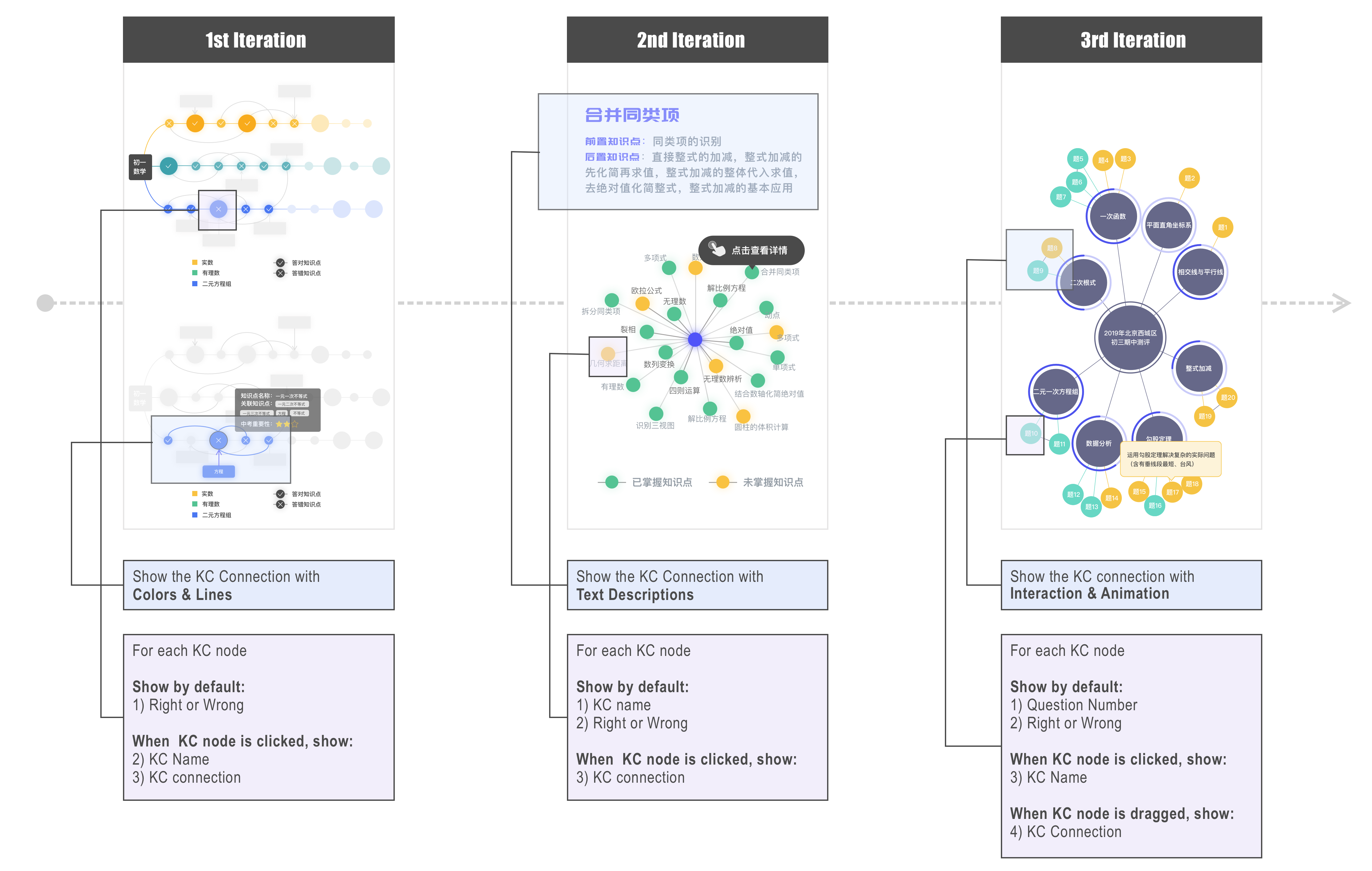
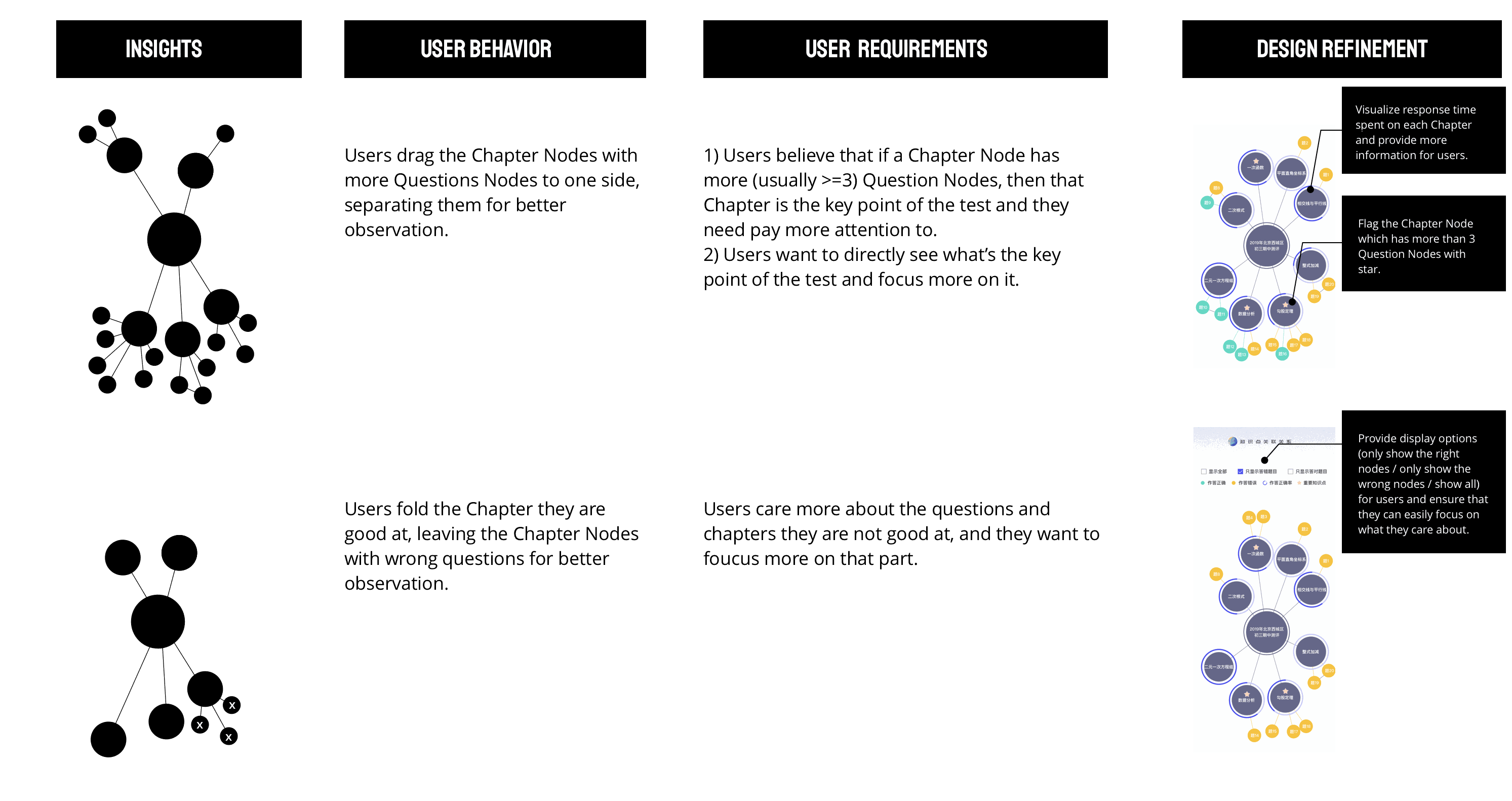
Guided by insights from user testing, we refined the chosen solution with greater precision and care.
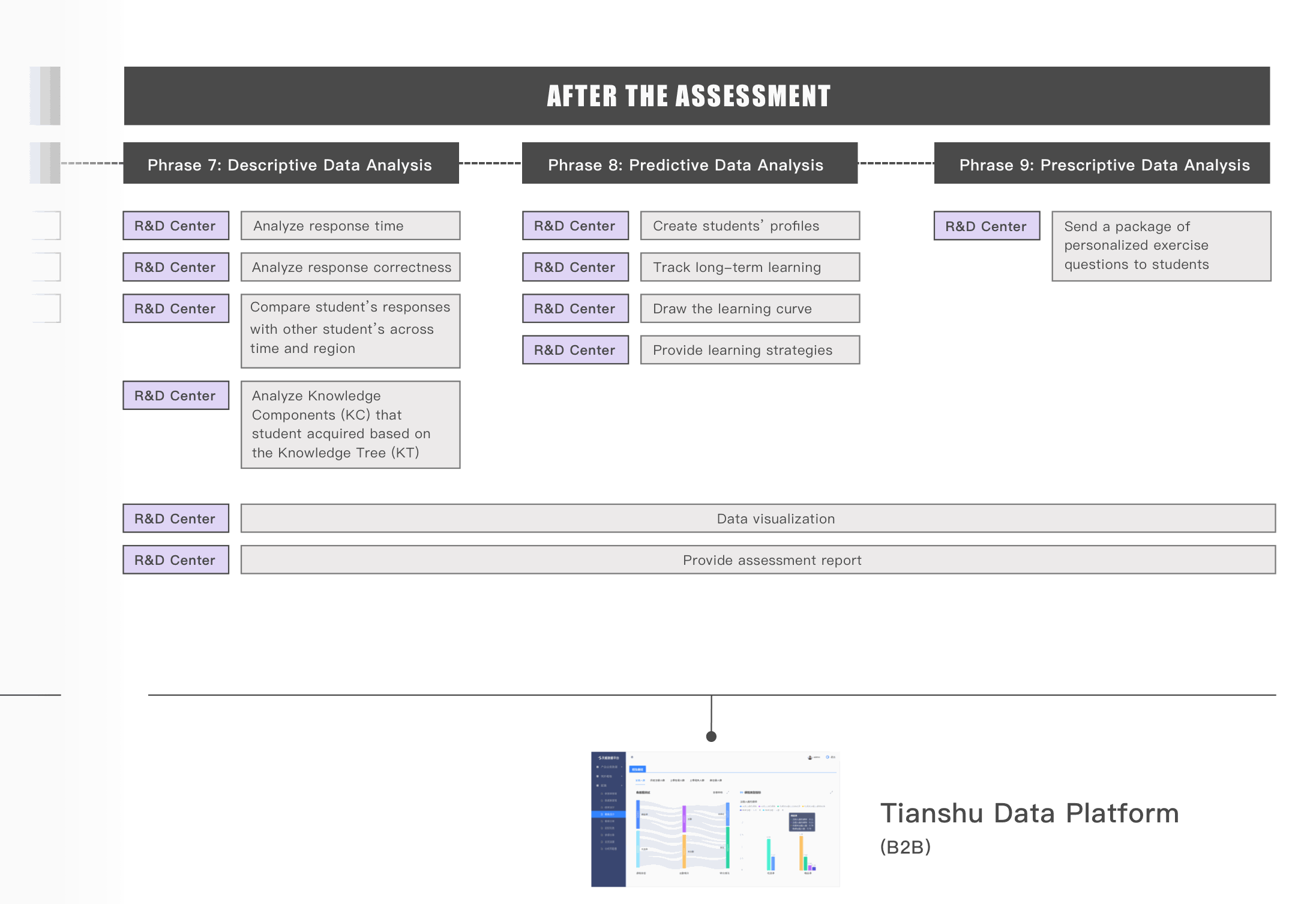
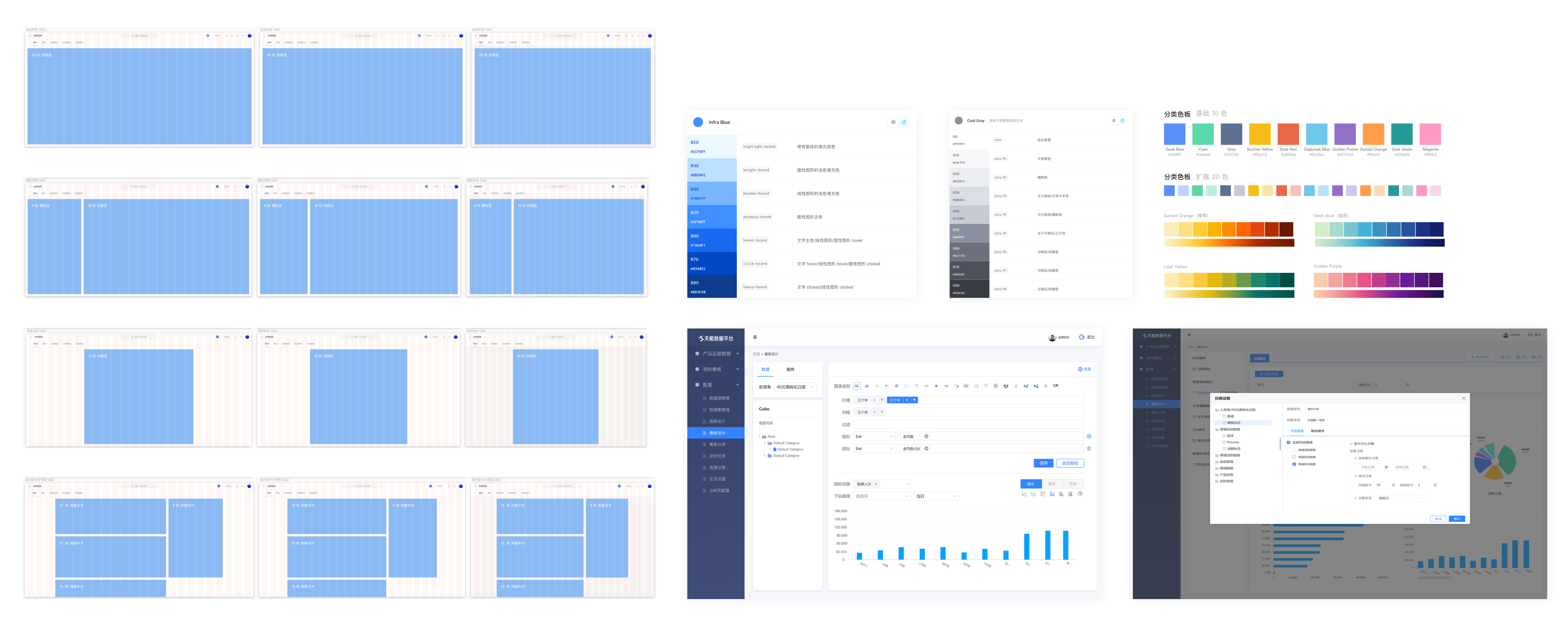
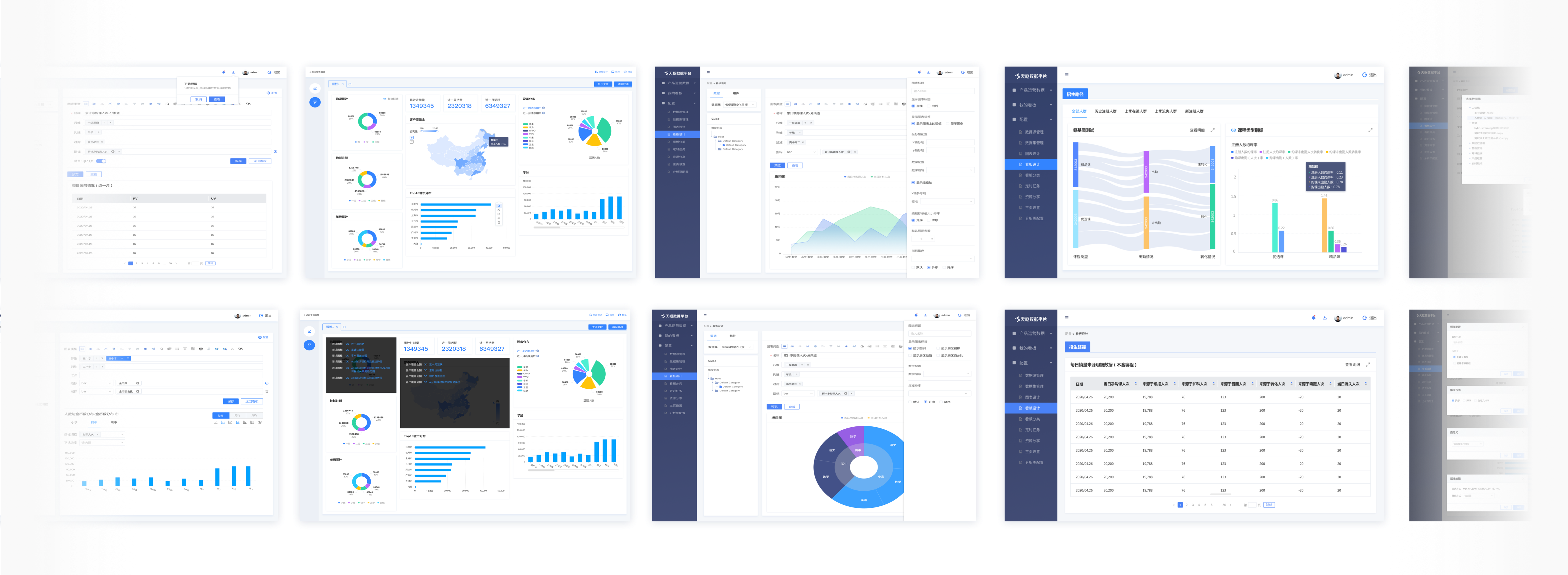
Tianshu Data Platform turns raw assessment data into meaningful insight. It builds individual student learning profiles, tracks progress over time, constructs learning curves, and generates predictive trajectories — equipping stakeholders, including school directors, with the clarity to shape smarter teaching strategies.
Due to an active NDA, this portion of the project cannot be shown in full.