

Mengxin Yu
Hou Yi and Ten Suns

Timeline

Apr 2018 - May 2018

Team

  • Chen Ni
  • Cherie Chen
  • Mengxin Yu
  • Shanshan Jin
  • Shengzhi Wu
  • Yejin Lee

My role

  • Storyboard design
  • VR game development
  • Web development

Domain

  • VR game design
  • Web VR

Final Product

Click here to start the immersive journey! This game requires a VR device.
It's OK to play it on website without device, but sometimes you may be upside down in the game :(
We also record a video for you. For your better experience, please turn the sound to the maximum and set resolution to 720P :p

Hope you enjoy it :)

About us

We are an interdisciplinary team of students from Carnegie Mellon University, united by a single question: how might storytelling come alive through WebVR? Drawn together by our shared love of Chinese folktales, we chose the timeless myth "Hou Yi and the Ten Suns" as our subject matter.

Background Story

"Hou Yi and the Ten Suns" is a Chinese folktale dating back at least 4,000 years. As the story goes, ten sun gods once took turns lighting the world, one each day. But one day, restless and bored, they all rose into the sky together. Their combined rays scorched the earth, drying rivers and turning the world into a barren wasteland. To save the Earth, the gods sent Hou Yi — a divine archer — to restore balance. He shot down nine of the ten suns, leaving a single sun to warm the world and bring life back to the land.

Main character

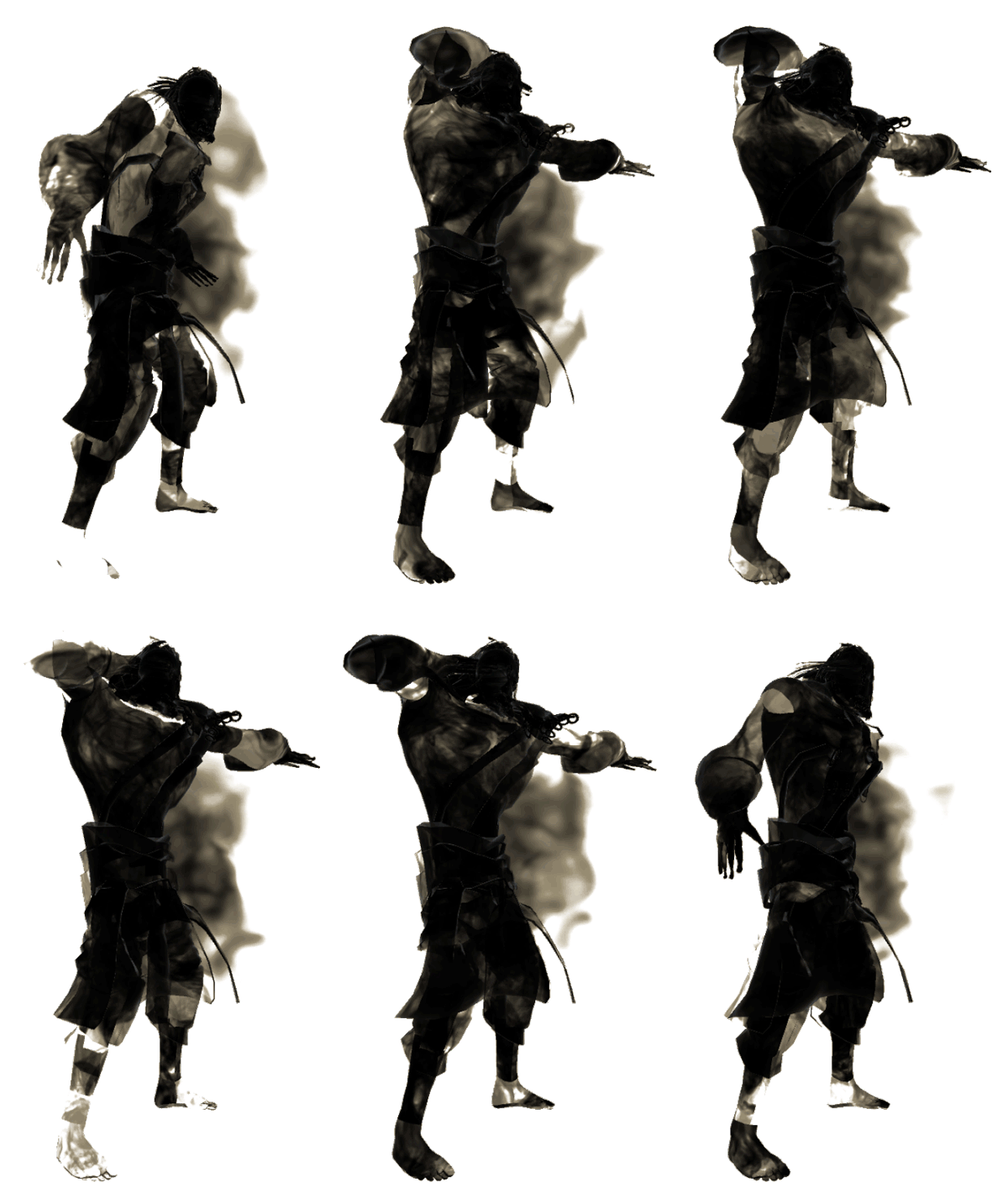
In Chinese mythology, Hou Yi stands as the God of Archery — a figure of unmatched strength and perfect aim. With a single bow, he saved the moon from eclipse and freed his people from plague after plague, among them a monstrous wind that once tore across the land. But his greatest feat endures above all: shooting down nine of the ten suns that once set the earth ablaze.

Design Process

Plot Design

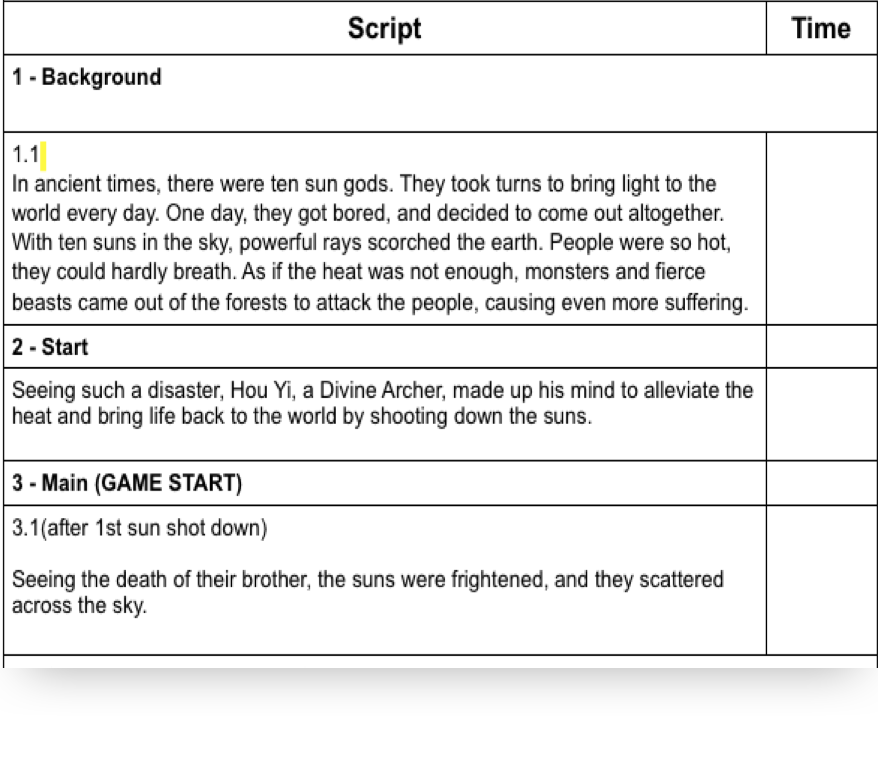
We began by scripting the storyline. In this phase, we defined the narrative structure as a team — establishing the opening moment, the key events in between, and the branching endings players could reach based on their decisions.

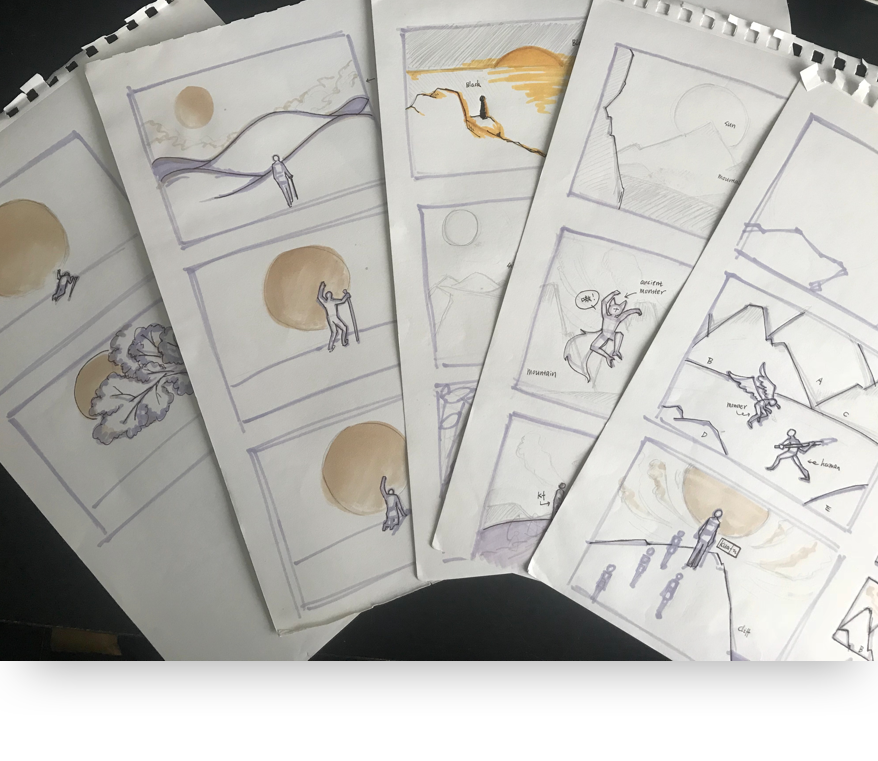
Guided by the script, we translated the storyline into a storyboard, bringing the entire narrative to life visually and refining it through quick, iterative sketches.

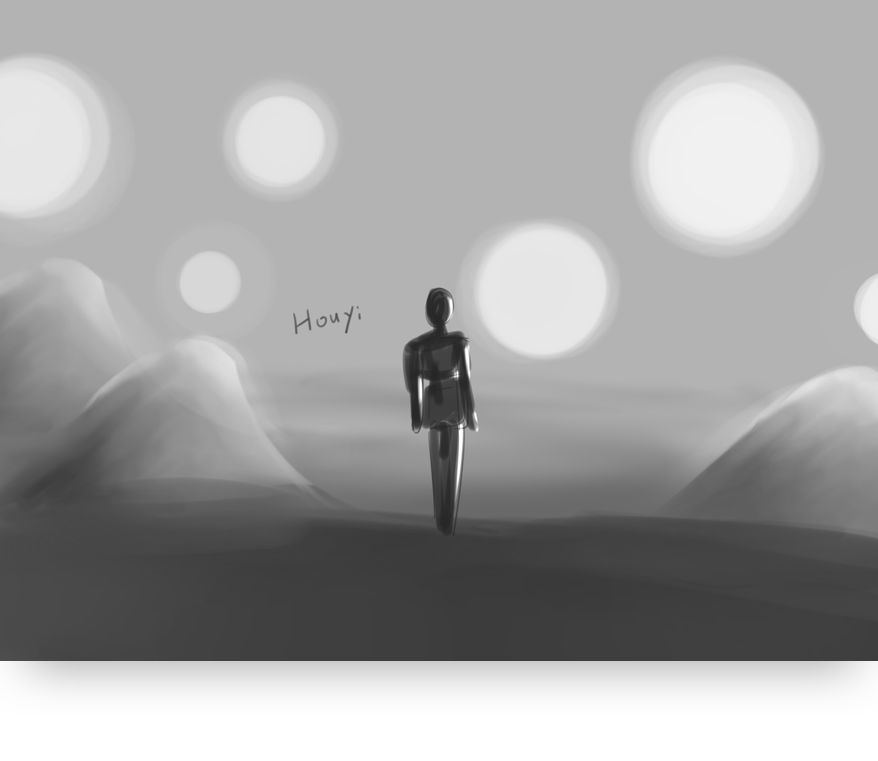
We then rebuilt the storyboard digitally in Clip Studio Paint, adding richer detail — lighting, texture, depth, and perspective — to ensure designers and developers shared a single, clear vision moving forward.

Visual Design

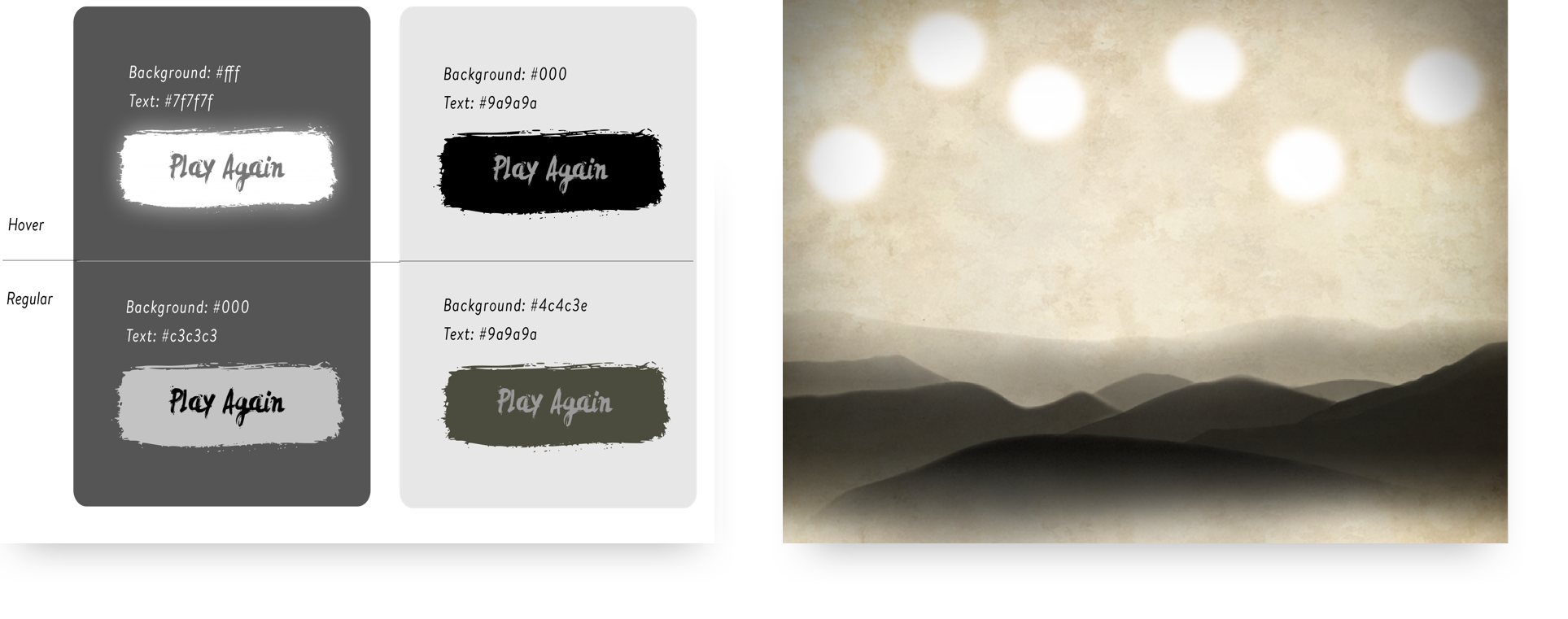
To make the experience of this ancient story truly immersive, we wove the aesthetic of Chinese ink-and-wash landscape painting throughout our design. The skybox was hand-painted on six sheets of Xuan paper, with varying ink intensities shaping the landscapes and creatures, and scattered ink splashes suggesting movement. Our UI elements — buttons, progress bars, and more — drew on the form of the traditional Chinese seal, tying the interface seamlessly to the world.

Character Design

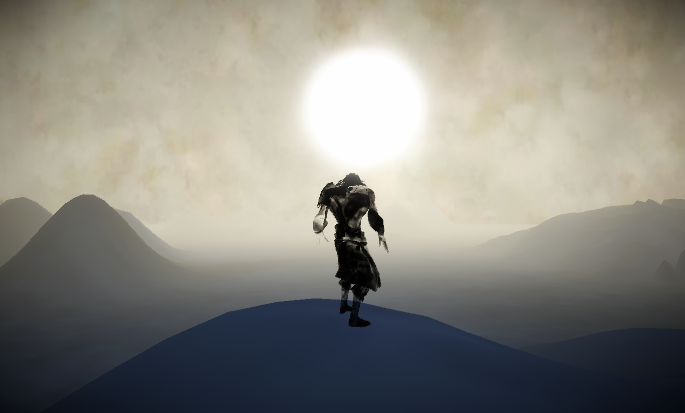
We shaped Hou Yi's deliberately stylized, larger-than-life physique in Adobe Fuse, then rigged and animated him in Mixamo to create a complete motion set — from standing and walking to drawing his bow.

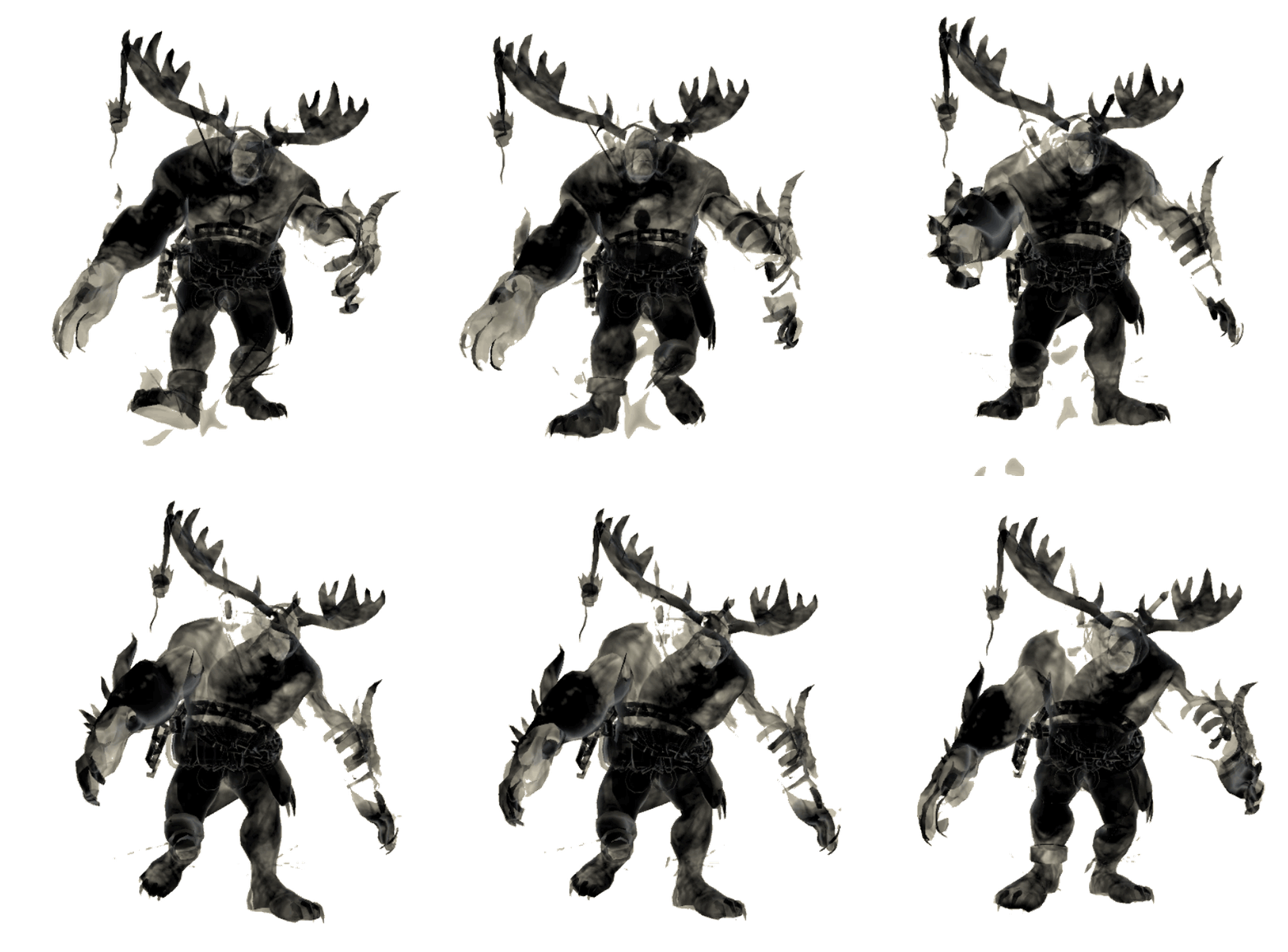
The monsters and additional assets were primarily sourced from Sketchfab, then brought to life with motion clips such as running and roaring.

Scene Design

Taking a page from architecture, we first built a foam-board prototype to test our ideas in physical space. Simulating the full game scene this way helped us define the terrain and refine our camera placement early on.

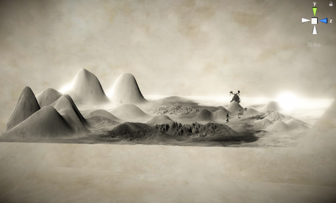
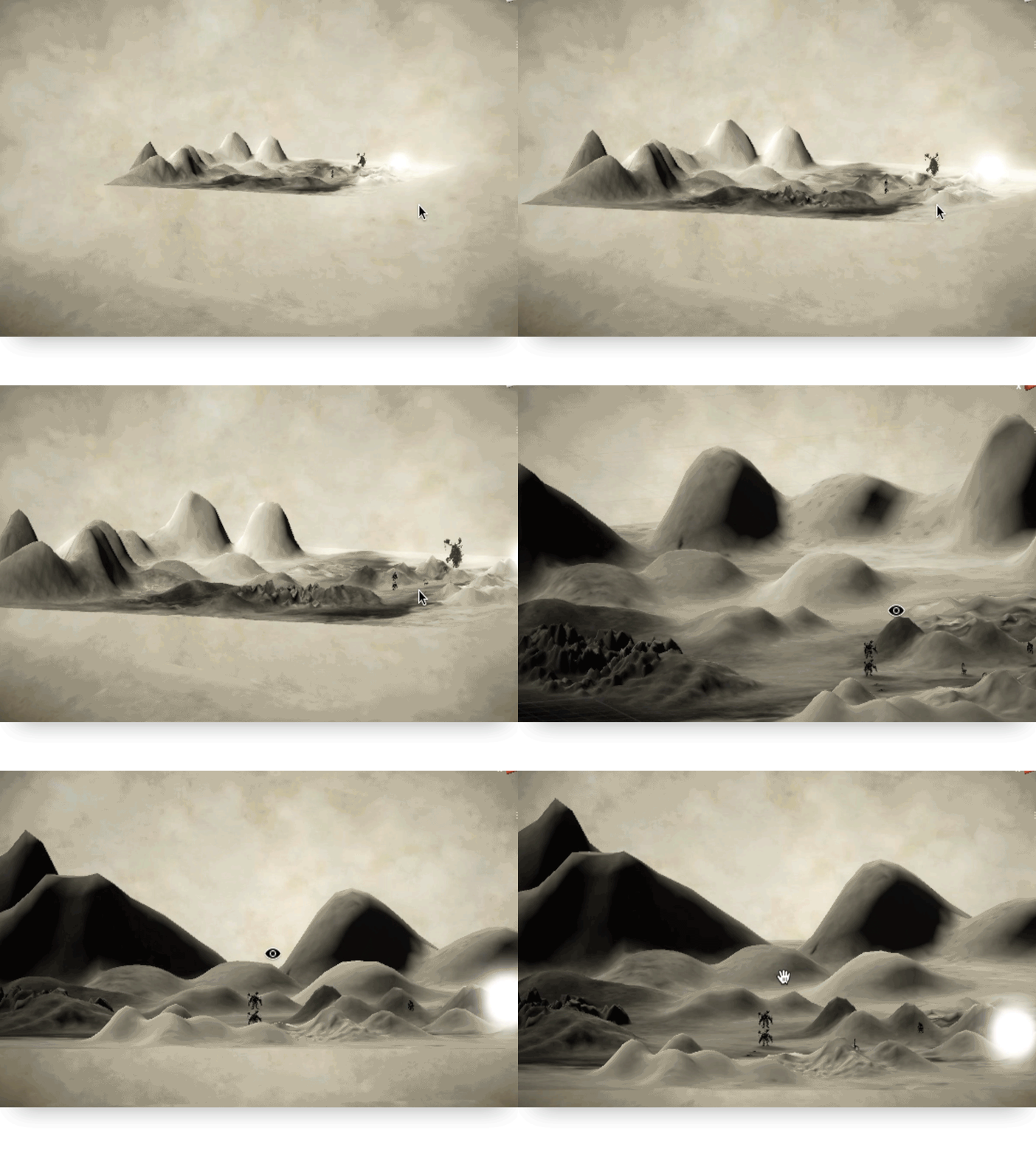
With those decisions locked in, we then built the landscape in Unity,

and set the position of the camera.

Develop Process

Phase One

Build all the assets in Unity

Phase Two

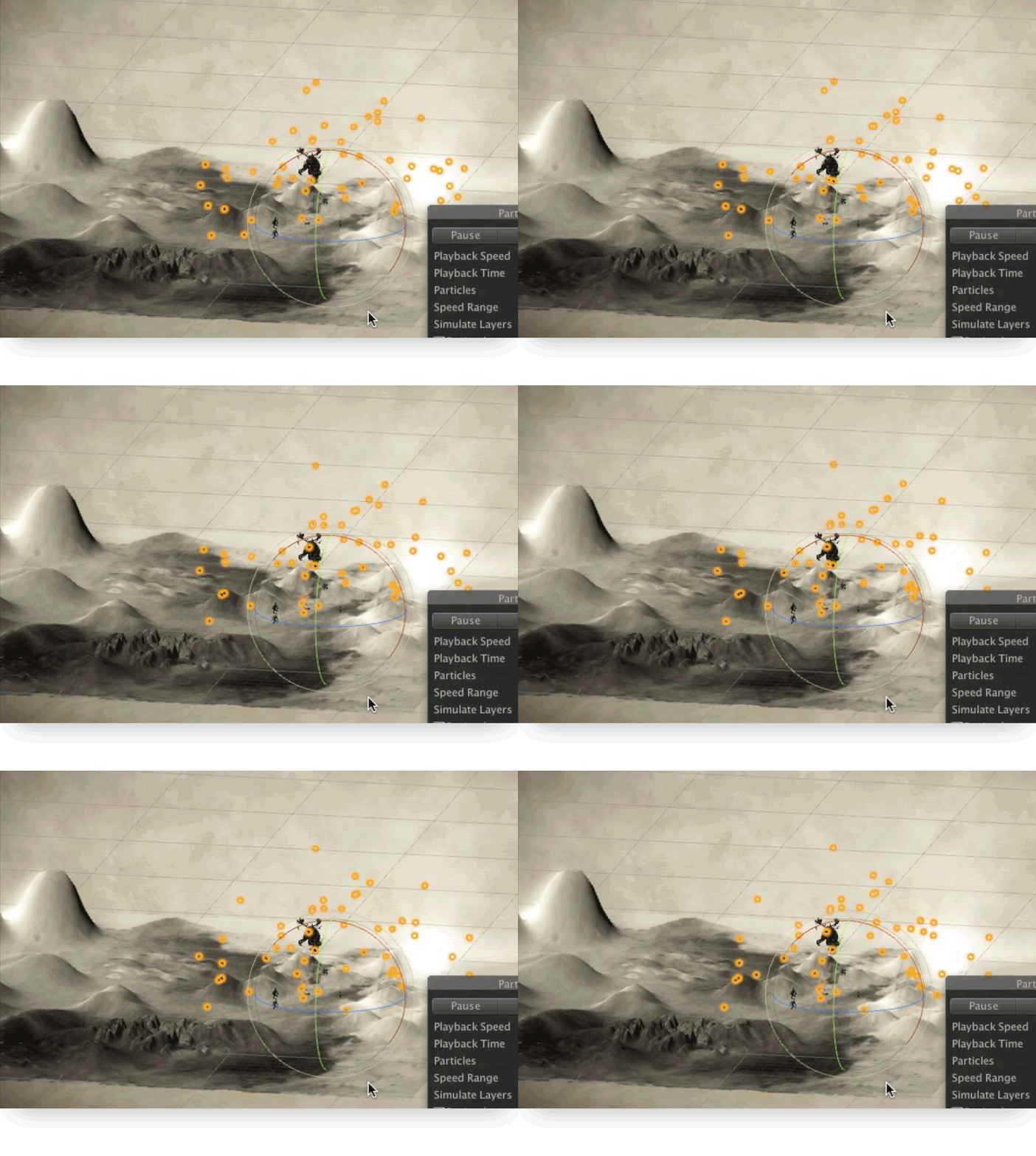
Add components (material, texture, particles, etc) to assets

Phase Three

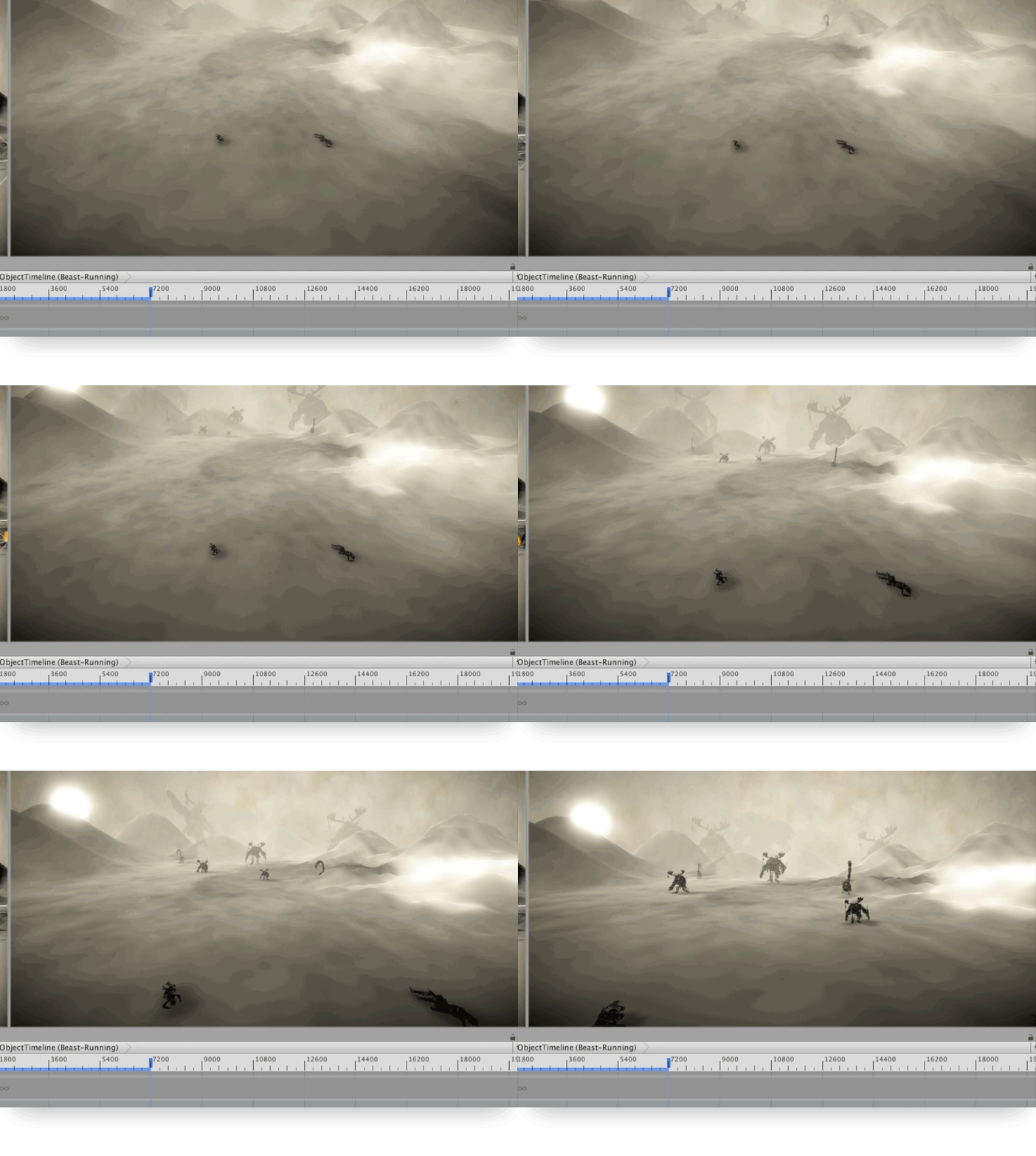
Set the timeline and make animations.

Phase Four

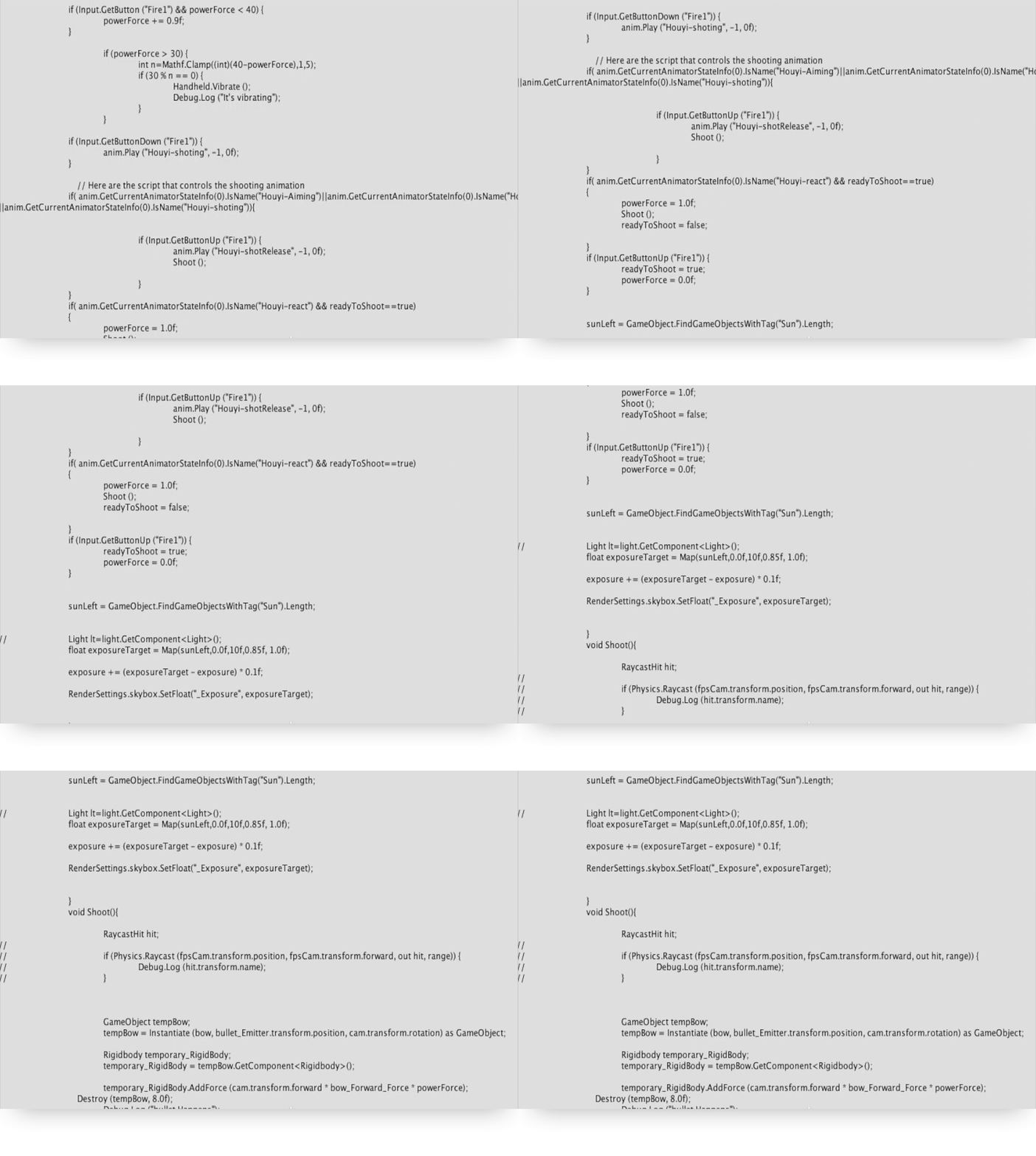
Write C# to control the event triggers.

Phase Five

Transfer the project outside Unity. Make sure the project is coherent and seamless across different platforms and devices